
Some Tech, AI & Academic Honesty Language for a HS Syllabus
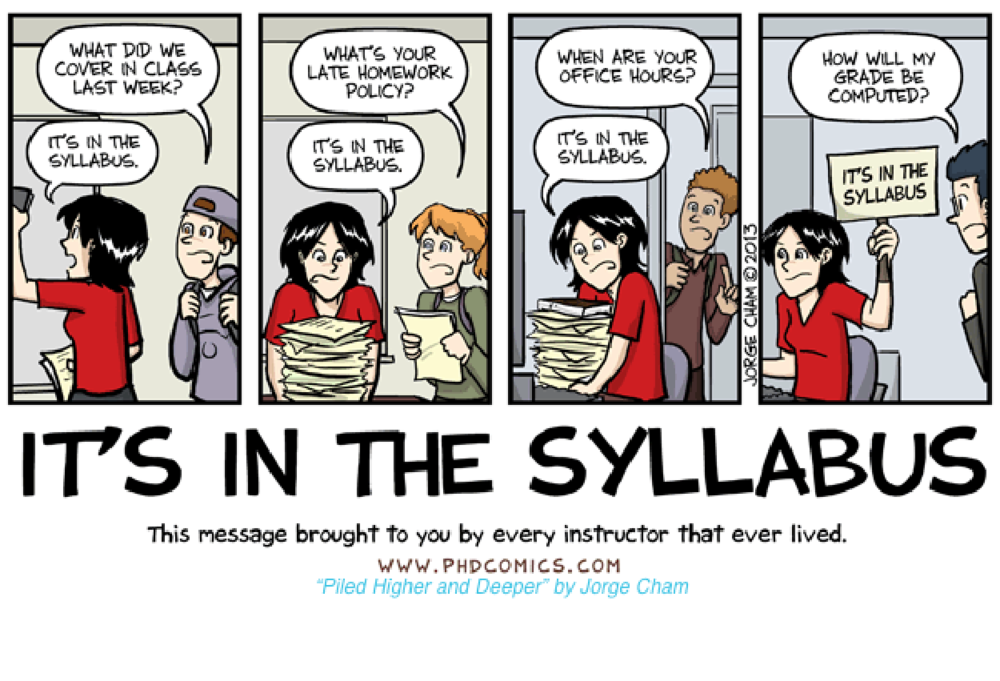
Image from a blog post from the OSU Center for Teaching an Learning: https://blogs.oregonstate.edu/osuteaching/2019/09/17/1014/
I’ve been away from classroom teaching for the past year. I start back at a new job tomorrow. I’ve spent a little time over the last week working up the syllabi for my classes. During my year away from teaching I’ve done a lot of thinking about the role of Ed Tech in my classroom. I’m trying to go into this school-year more deliberate about my use of Ed Tech. That decision to be more deliberate has also prompted me to go more analogue in the classroom much of the time. With some of that in mind, I’ve drafted the below section for my syllabi (this one specific to my IBDP Psychology class). I’m returning to a school where I taught previously, but I’ve been gone from it for five years and it’s changed quite a bit. I need to re-learn the school’s policies and culture, meaning that I may have to adjust some of what I’ve written below. Nonetheless, it captures what I’m currently thinking. I’m very curious to hear from others. Where do you see the problems? Where would you go further? Where would you take issue with my approach?
Academic Honesty and the Honor Pledge
Academic dishonesty entails submitting work as your own that is, in some way, in part or in whole, not your own. It may be work that was done partly or wholly by a parent, a tutor, a classmate, an AI tool, etc. Academic dishonesty is a concern to teachers, not because we’re all a bunch of rule-followers that take pleasure in catching student violations; rather, it’s because it’s an issue that negatively impacts learning. If students continually submit work that is not their own, the teacher is unable to get an accurate sense of what the students actually know, understand, and are able to do. Students could easily hide the fact that they are struggling and not learning, which means the teacher cannot help the students.
In light of this, in this class, I require an Honor Pledge. It is a simple statement that students must write on all work that they submit, including practice assignments, formative assessments, and summative assessments. Anything that is submitted to the teacher must have the honor pledge stated on it with the student’s initials underneath. The pledge can be at the top, in the header, or at the bottom, but it must be there. The Honor Pledge is as follows:
“On my honor, I pledge that this work is completely my own. Where I have acquired information or evidence from sources, I have given credit to those sources.”
A More Analog Classroom
There is a growing amount of evidence that suggests that the digital devices and screens in our lives are contributing to less attentive, and more fractured and distracted thinking. Research suggests that, because we spend so much of our lives with digital devices and screens as sources of relatively mindless entertainment (scrolling through social media and video shorts, streaming movies and TV shows, gaming, chatting with friends, etc.), it’s difficult for us to shift and use these same devices for learning. It is hard to use a screen for legitimate and focused academic work when we’re used to using the device for TikTok, YouTube, gaming, Netflix and DM chats. The device is further distracting when all of those applications are open just behind our work window, available at a click away, sending us constant notifications. On top of this, there is now also the temptation of AI tools that can essentially do our thinking for us in the blink of an eye so that we can go back to our mindless entertainment.
My goal in this IBDP psychology class is to help you learn some foundational concepts and theories in psychology. I want you to know, understand, and remember stuff. I hope to help you understand how new knowledge is produced in psychology through social science research methods. I want to help you become more aware of yourself as an individual and as a social being. I hope you’ll become a more self-aware and knowledgeable person and a more critical consumer of information. We can’t accomplish any of these things together if you are distracted, unfocused, and lazily outsourcing your thinking to AI.
For this reason, I intend to reduce our use of screen-based digital tools in this classroom. You will turn your phone off or to silent and surrender it as you enter the classroom. You will keep your laptops / tablets closed and away unless instructed to do otherwise. You will do the same with your headphones and earbuds. You will come to class with a notebook, pen / pencil, and a folder / binder for hard-copy documents. You will take notes by hand on your homework readings and in the classroom. Note that your IBDP external exams will be written by hand, so consider the hand-written notes as a way of building your hand-writing stamina.
There will be times when we will use our laptops / tablets. There will also be times when we will use various digital tools. We will do this only when I have determined that the learning value of the tool outweighs the potential for distraction.
Use of Generative AI Tools
In order to succeed in this class, you must think for yourself. As a result, our class will rarely contain a good use-case for Generative AI tools . Having said that, I am also very aware of the overwhelming temptation to use these tools. Thinking is hard work; humans tend to avoid hard work when possible and AI tools make that quite easy. I’m also not interested in playing the policeman. I want our relationship as teacher and students to be one of trust, focused on learning together. In order to avoid a climate of distrust and suspicion, I will do three things related to AI:
When it’s okay to use AI in some way, I will make that transparently clear to you. I will tell you that you’re allowed to use it and provide guidelines on how you can use it.
When it’s not okay to use AI, I will set up the assignment or assessment in a way that eliminates AI as an option, or renders it relatively unhelpful.
With project-based assessments, which are assessments that you’ll work on inside and outside of the classroom, at the time of submission I will randomly select a certain number of students to provide a short viva voce of their work in front of the class. The viva voce will require the student to give a summary of their work and then respond to questions about it. If your name is selected, your ability to summarize and explain your work in the viva voce will be considered as part of your score for the assignment. This does not require a polished presentation; that’s not the point. Your score will be based on your understanding of the work that you’ve submitted as your own.
In addition, I reserve the right, if I have any concerns about the authenticity of a student’s work, to ask the student to meet with me one-on-one for a more extended viva voce.
I recognize that students sometimes make mistakes and deserve the opportunity to make amends. If at any point you wish to admit that there’s a dishonest element in something you’ve submitted, I will accept that apology (in person or by email), and, after a brief one-on-one conversation, will allow you to redo the assignment with a one rubric-level deduction. If your apology is genuine and there is no evidence of a pattern of dishonesty, we will consider the incident as an adolescent maturing experience and move on without any need of reporting the incident to parents or school administration.
